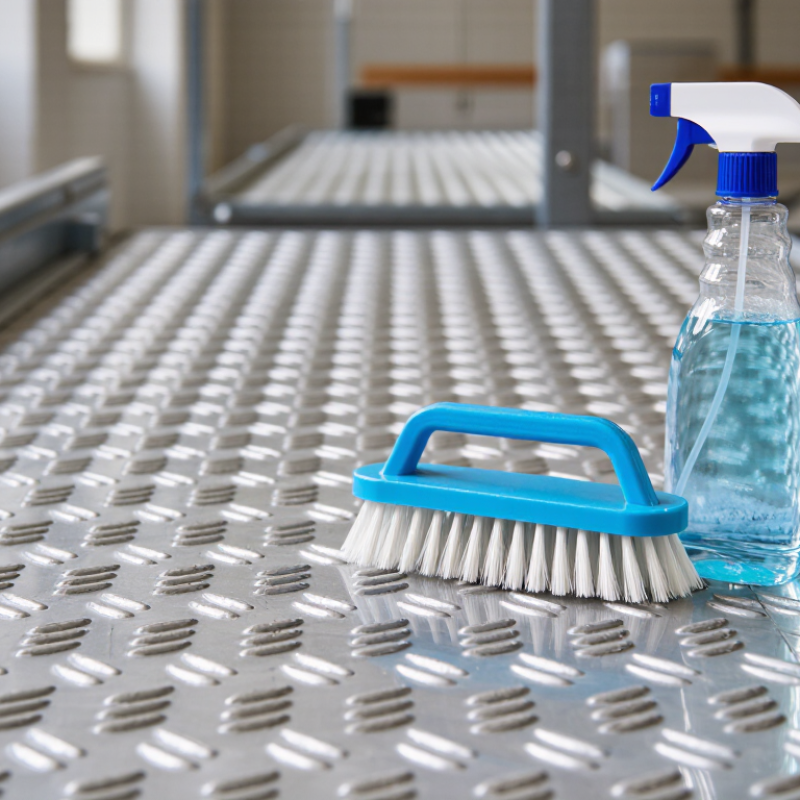
Aluminium tread plates are built for demanding spaces, but their raised pattern can trap grit, oil, and moisture. Learning how to maintain aluminium tread plates helps preserve their appearance and reduces avoidable surface wear. A quick rinse may remove loose dust, yet fine dirt can remain in the grooves. Use clean water, a soft nylon brush, and a mild, non-alkaline detergent. Work along the pattern, then rinse thoroughly and dry the surface with a clean cloth. Small details matter.
The right routine depends on where the plate is installed. A workshop floor may need more frequent cleaning than an indoor step, especially near machinery or entrances. Check corners, seams, and fasteners for trapped debris or signs of corrosion. Avoid steel wool, harsh acids, and abrasive pads; they can scratch the aluminium or damage its finish. If contamination remains, test a suitable aluminium cleaner on a hidden area first. Not every product labeled “metal-safe” is appropriate.
A real expert quotation should be verified before publication. No source or expert name was provided, so assigning a quote to a named specialist would risk inventing authority. This guide therefore focuses on practical care: clean gently, rinse completely, and inspect regularly. It is not a perfect formula. Local conditions can change what works.
Before choosing a cleaning method, identify the aluminium tread plate’s alloy and temper. Check its markings, purchase records, or material certificate; appearance alone is not enough. A portable alloy analyser may help identify composition, but it does not reliably establish temper. That distinction matters. Some alloys tolerate marine exposure better than others, while strength and formability also vary. If records are missing, do not guess from the plate’s colour or pattern. Even careful inventories can be incomplete.
Next, identify the surface finish. A mill-finish plate, anodised surface, and painted coating need different care. Use a soft brush, clean water, and a mild detergent for routine dirt. Test any cleaner on a small, hidden area first. Avoid harsh acids, strong alkalis, and abrasive pads; they can stain aluminium or wear through a protective finish. Check the edges and grooves, where grit and moisture often collect. Dry the plate after washing, especially around fasteners.
Then assess the service conditions. Note whether the plate sees road salt, seawater mist, workshop chemicals, standing water, or heavy foot traffic. Look for white deposits, dark staining, loose coatings, and corrosion around steel fixings. Rinse salt away promptly, and avoid trapping wet debris beneath mats. Where dissimilar metals touch, suitable isolation may reduce corrosion. The right routine depends on exposure, not just the plate’s appearance. A spotless surface can still hide damage at a joint.
Inspect aluminium tread plates when they are dry and well lit. Dirt often settles in the grooves, where it can hide scratches, pitting, and trapped moisture. Use a soft brush and suitable cleaner; avoid abrasive tools that may damage the surface. Check corners, fasteners, seams, and areas beneath mats or stored equipment. Look for white or dull powdery deposits, dark stains, lifted edges, and dents that could collect water. Take close-up photos of questionable spots and compare them during later inspections. Small marks can be easy to dismiss.
The 2016 NACE International IMPACT study estimated corrosion costs at US$2.5 trillion worldwide, or 3.4% of global GDP. That figure covers many industries and materials, not aluminium tread plates alone, but it shows why corrosion checks matter. Record the plate location, visible condition, and any change in damage. If corrosion appears near a joint, inspect for standing water or residue as well. A clean surface can still conceal a problem. I would not treat every stain as corrosion; confirm it after cleaning, and seek qualified assessment when pitting is deep or spreading. This judgment can be imperfect, especially where coatings or grime obscure the metal.
Aluminium tread plates trap grit, oily residue, and road salt between their raised patterns. Use lukewarm water, a pH-neutral detergent, and a soft nylon brush or microfiber cloth. Clean along the pattern, using light pressure rather than grinding dirt into the surface. Keep it gentle. Avoid steel wool, abrasive pads, and strongly acidic or alkaline cleaners; these may scratch the finish or cause discoloration. Test an unfamiliar cleaner on a small, hidden area first.
Rinse thoroughly, especially after exposure to salt or detergent, since residue can leave marks. Dry the plate with a clean, lint-free cloth to limit water spots. For stubborn grease, repeat the mild wash instead of reaching immediately for a stronger solvent. It takes longer. That trade-off is usually worth it. Inspect corners and grooves during cleaning; trapped debris can hide early pitting, and a bright surface does not always mean an undamaged one.
European Aluminium’s Environmental Profile Report 2018 states that recycled aluminium production uses about 5% of the energy required for primary aluminium production. That figure describes manufacturing, not cleaning, but it supports avoiding needless surface damage and keeping usable plates in service. Record recurring stains or corrosion, too. I sometimes find that a quick wipe misses what a closer inspection would catch.
| Cleaning Task | Suitable Tools | Suitable Cleaner | Recommended Method | Avoid |
|---|---|---|---|---|
| Routine dust and light dirt | Soft cloth, sponge, or soft-bristle nylon brush | Clean water; mild, pH-neutral detergent if needed | Remove loose dirt first. Wash gently, rinse thoroughly with clean water, and dry with a soft cloth. | Dry scrubbing with gritty dust or using abrasive pads that may scratch the surface |
| Grease or oily marks | Soft cloth or non-metallic nylon brush | Mild detergent diluted according to its label | Apply the diluted cleaner with a damp cloth, work gently, then rinse well so detergent residue does not remain. | Strong alkaline degreasers, caustic soda, or unapproved solvent cleaners |
| Mud or dried-on soil | Water hose, soft sponge, or nylon brush | Water and mild detergent for persistent dirt | Soften the soil with water before wiping or brushing. Clean along the plate’s surface features without forcing grit across the metal. | Scraping with metal blades or stiff metal brushes |
| Salt or de-icing residue | Soft cloth or nylon brush and clean-water rinse | Clean water; mild pH-neutral detergent if residue remains | Rinse promptly and thoroughly, then dry the surface, especially around edges and joints where moisture can collect. | Leaving salt deposits in place or using chloride-based cleaners |
| Unknown stains or coated plates | Soft cloth and a small test area | A cleaner approved for the plate’s finish or coating | Check the supplier’s care instructions and test the cleaner on an inconspicuous area before treating the full surface. | Unverified acidic or strongly alkaline products that may discolor or damage the finish |
| After any cleaning | Clean, soft drying cloth | Clean rinse water | Remove all cleaner residue and dry the plate. Inspect periodically for trapped dirt, standing water, or surface damage. | Allowing cleaner to dry on the surface or leaving water pooled in joints |
Aluminium tread plates resist corrosion because a thin oxide layer forms naturally on their surface. European Aluminium’s technical guidance describes this protective film as only a few nanometres thick. Abrasive pads and aggressive cleaners can scratch the finish or disrupt its appearance. Treat stains gently; a bright surface can still hide early pitting.
Rinse away loose grit before wiping, or particles can drag across the raised pattern. Use lukewarm water, a pH-neutral detergent, and a soft nylon brush. Work along the tread, then rinse thoroughly and dry with a clean cloth to limit water marks. For oily stains, repeat the mild wash rather than reaching immediately for solvent. Avoid steel wool, bleach, strong acids, and highly alkaline cleaners. If corrosion has left pits, cleaning will not restore the metal; inspect the area before considering a suitable refinishing method.
Tips: Test any cleaner on a hidden spot first. Leave it briefly, rinse, and check for dulling or colour change. It is easy to over-clean a stubborn mark; pause if the finish starts looking uneven.
How to Maintain Aluminium Tread Plates?
Aluminium tread plates resist corrosion, but they still need careful protection. Remove dust, grit, and oily residue with clean water and a mild detergent. Use a soft brush along the raised pattern. Avoid steel wool, harsh chemicals, and abrasive pads. These tools can scratch the surface and trap moisture. Dry the plate completely, especially around grooves and cut edges. I have seen small scratches become dull patches when cleaning was rushed. Inspect the plate under bright light. Look for dents, loose fasteners, white powdery deposits, and dark moisture marks. Record these findings before returning the plate to service.
Storage conditions strongly influence future wear. Keep tread plates indoors, away from rain, condensation, and chemical vapors. Place them on level supports with wooden or polymer spacers. Do not lay them directly on concrete. Concrete can hold moisture against the underside. Separate stacked plates to prevent trapped dirt and surface rubbing. Keep heavy objects off the stack. Store plates horizontally when possible, but support long sheets regularly to prevent bending. Cover them with a breathable material. Plastic wrapping can trap condensation.
Handle each plate with clean gloves and suitable lifting equipment. Dragging it across another sheet damages the raised pattern. Protect corners during transport with padded separators. Check stored plates every few months, even in a dry room. Conditions change. A storage plan that worked last winter may fail during humid weather. If moisture appears, uncover the stack, dry every surface, and improve air circulation before restacking. Don’t ignore small problems.
Check markings, purchase records, or the material certificate. Appearance alone is unreliable. A portable analyser may suggest the alloy, but it cannot confirm the temper. Do not guess.
Yes. Mill-finish, anodised, and painted surfaces need different care. Test unfamiliar cleaners in a hidden area. Small tests prevent larger mistakes.
Use lukewarm water, pH-neutral detergent, and a soft nylon brush. A microfiber cloth also works. Clean along the raised pattern with light pressure. Keep it gentle.
Wash with mild detergent, then rinse thoroughly with clean water. Repeat the wash for stubborn grease. Avoid strong solvents, harsh acids, and strong alkalis. They may stain or damage the finish.
Check grooves, corners, cut edges, fasteners, and joints. These areas collect grit and moisture. Look for white deposits, dark stains, dents, and loose fasteners. Bright surfaces can still hide pitting.
Rinse away road salt and seawater residue quickly. Keep wet debris from remaining under mats. Suitable isolation between different metals may reduce corrosion. This detail is easy to overlook.
Store plates indoors, away from rain, condensation, and chemical vapours. Use level supports with wooden or polymer spacers. Do not place plates directly on concrete. Concrete can hold moisture against the underside.
Separate stacked plates to prevent dirt and surface rubbing. Support long sheets regularly to limit bending. Use clean gloves and suitable lifting equipment. Never drag one plate across another. Plastic wrapping can trap condensation. A breathable cover is safer.
How to maintain aluminium tread plates begins with understanding the plate’s alloy, surface finish, and service conditions. Different environments, such as outdoor areas, workshops, vehicles, or industrial spaces, can expose aluminium to moisture, chemicals, dirt, and heavy wear. Regular inspections should check for accumulated debris, scratches, dents, loose areas, discoloration, and early signs of corrosion so that minor problems can be handled before they become more serious.
Clean the surface with soft brushes, non-abrasive cloths, clean water, and a mild detergent suitable for aluminium. Avoid harsh chemicals, steel wool, and aggressive tools that may damage the tread pattern or finish. Stubborn stains and light corrosion should be treated carefully with a compatible aluminium cleaner and gentle rubbing, followed by thorough rinsing and drying. To reduce future wear, keep the plates dry, remove spills promptly, use suitable protective coverings when needed, and store unused plates in a clean, ventilated place away from moisture and incompatible materials.

Cellar Aluminum