7 Best Advantages of Aluminium Over Steel for Buyers?

Time:2026-10-09 Author:Henry
0%

When buyers ask, “what are the advantages of aluminium over steel,” the answer should begin with application, not fashion. Aluminium usually offers lower density, strong corrosion resistance, and easier weight reduction. Its density is about one-third that of steel. That difference can matter in vehicles, trailers, platforms, doors, and lifting equipment. Every kilogram saved may reduce transport energy and increase usable payload.

The U.S. Department of Energy reports that a 10% reduction in vehicle weight can improve fuel economy by roughly 6% to 8%. The International Aluminium Institute also reports that recycled aluminium requires only about 5% of the energy used for primary production. These figures support aluminium’s practical and environmental case. However, they are not universal guarantees. Alloy choice, forming method, joining technique, maintenance, and recycling access can change the result. Aluminium can also cost more initially and may require careful protection against galvanic corrosion.

Dr. Marlen Bertram, an aluminium industry specialist at the International Aluminium Institute, describes aluminium as “a material for the future.” That view is persuasive, but buyers should test it against real project conditions. A lighter panel may improve handling. A corrosion-resistant frame may reduce repainting. A steel component may still provide better stiffness, fire performance, or price. The strongest purchasing decision compares the complete life cycle, not only the invoice. This guide examines seven practical advantages of aluminium over steel, while acknowledging where aluminium’s benefits become less clear.
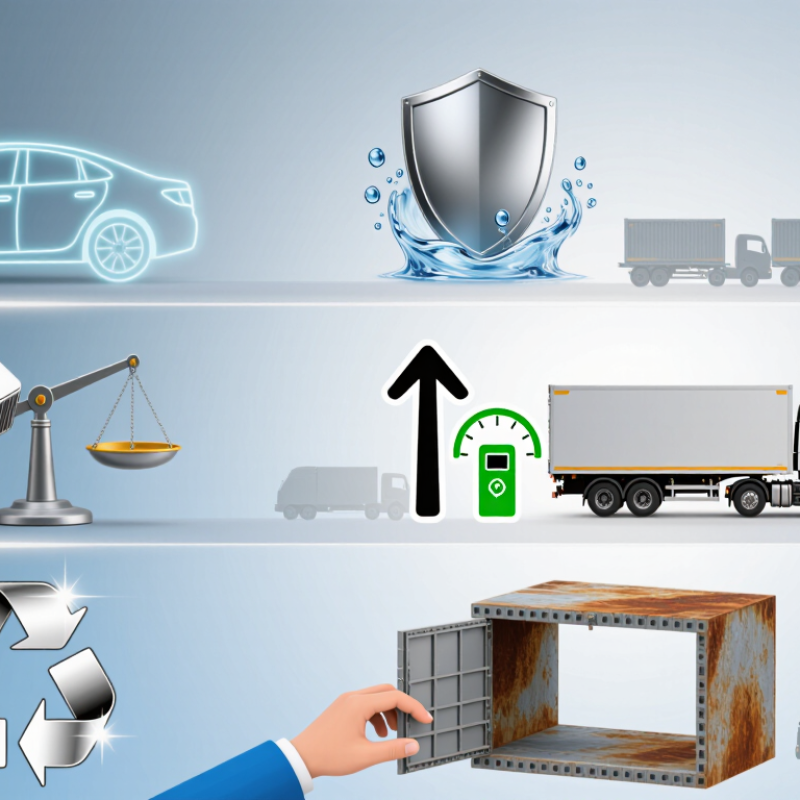
7 Best Advantages of Aluminium Over Steel for Buyers?

Aluminium and Steel: Key Differences for Buyers

Aluminium and steel behave differently in real purchasing decisions. Aluminium is about one-third the density of steel, so the same-sized component weighs far less. This can reduce lifting effort, transport loads, and supporting-structure requirements. It also forms a protective oxide layer, giving it useful corrosion resistance in many outdoor environments. Less coating work. However, saltwater and dissimilar-metal contact can still cause corrosion, so isolation and suitable fasteners matter.

Aluminium is easier to extrude, cut, and form into complex profiles. That flexibility can reduce part counts and simplify assembly. It also conducts heat and electricity efficiently, which benefits heat-transfer equipment and electrical enclosures. Many aluminium alloys offer a clean surface with limited maintenance. Steel generally provides greater stiffness, hardness, and impact resistance, especially in demanding structural applications. Buyers should compare alloy grades, not just material names. A thin aluminium panel may dent sooner than a thicker steel panel.

Recycling is another advantage. Aluminium can retain significant material value after service, while steel also has strong recycling systems. Actual savings depend on collection and processing access. Price comparisons can mislead. Aluminium may cost more per kilogram, yet lower weight and easier fabrication can improve total project cost. I would still request samples, corrosion details, load calculations, and finishing requirements before ordering. One overlooked issue is thermal expansion; aluminium moves more with temperature changes. That small detail can become a serious fit problem.

Lower Weight and Easier Handling of Aluminium

Aluminium’s density is about 2.70 g/cm³, while carbon steel is approximately 7.85 g/cm³. That makes aluminium nearly 65% lighter by volume. For buyers, this difference is visible immediately. A worker can move a sheet, frame, or enclosure with less strain. Fewer people may be needed for installation. Lifting equipment can also be smaller. The International Aluminium Institute reports that lightweight aluminium can reduce transport energy use across several applications. The benefit is practical, not merely theoretical.

Handling becomes easier on busy sites. Aluminium components are simpler to carry through narrow corridors, place on elevated platforms, and adjust during assembly. The Aluminum Association’s transport data indicates that reducing vehicle weight by 10% may improve fuel economy by roughly 6–8%. Results vary with design and operating conditions. That matters. Aluminium is not automatically the best choice. A thinner section may require careful engineering, especially where impact loads, fatigue, or stiffness are important.

Tips: Compare weight per finished component, not per kilogram of raw material. Ask suppliers for lifting limits, wall thickness, and test data. Use corrosion-resistant fasteners and avoid direct contact with incompatible metals. A lighter product can still fail if its joints are poorly designed. Buyers should review the full handling process, from delivery truck to final installation, before approving the specification.

Superior Corrosion Resistance and Longer Service Life

Aluminium offers buyers a strong advantage where moisture, salt, and changing temperatures are common. Its surface quickly forms a thin aluminium oxide layer. This layer slows further corrosion without needing paint or coatings. Steel can develop red rust after scratches expose fresh metal. In coastal air, that difference becomes visible around fasteners, joints, and edges.

Longer service life often means fewer repairs and lower maintenance costs. An aluminium frame may remain clean after years of rain, while untreated steel needs sanding and repainting. It is not maintenance-free. Dirt, trapped water, and contact with dissimilar metals can still cause damage. Installers should use suitable fasteners and allow drainage beneath joints. That small detail matters.

From practical inspections, aluminium performs especially well in window frames, transport structures, outdoor enclosures, and light industrial equipment. It does not swell like some materials, and its corrosion products are less likely to flake across nearby surfaces. However, steel can be stronger for heavily loaded applications, so corrosion resistance should not be the only buying factor. A poorly designed aluminium assembly may fail earlier than a protected steel one. Buyers should check alloy selection, wall thickness, drainage design, and the expected environment before comparing prices. A slightly higher purchase cost can make sense when repainting, shutdowns, and replacement labor are included.

Design Flexibility, Thermal Performance, and Surface Finishing

Aluminium gives buyers more design freedom than steel in many fabricated applications. Its density is about 2.70 g/cm³, compared with steel at roughly 7.85 g/cm³, according to the International Aluminium Institute. That weight gap can reduce handling effort, transport loads, and supporting structure requirements. Aluminium also extrudes efficiently, allowing thin walls, channels, ribs, and integrated mounting features. Complex shapes are often possible without assembling several steel parts. This can reduce joints and potential failure points.

Thermal performance is another practical advantage. Typical aluminium alloys conduct heat at approximately 150–235 W/m·K, while common carbon steels usually range between 45–60 W/m·K. Data from the U.S. Department of Energy supports aluminium’s strong heat-transfer role in lightweight heat exchangers and building components. It can spread heat quickly across a panel or enclosure. That is useful around lighting, electronics, and solar equipment. However, fast heat transfer can also create unwanted heat loss. Insulation must be designed carefully.

Surface finishing expands the visual and protective options. Anodising can create a durable oxide layer, while powder coating provides broad colour and texture choices. The European Aluminium industry reports that aluminium’s natural oxide film supports strong corrosion resistance in many environments. Still, this is not automatic. Salt exposure, trapped moisture, and contact with dissimilar metals require proper detailing. Buyers sometimes focus on appearance and overlook drainage. That mistake can shorten service life, even when the alloy itself is suitable.

Cost, Sustainability, and Choosing the Right Material

For buyers, aluminium can offer seven practical advantages over steel: lower weight, easier handling, reduced transport costs, corrosion resistance, simpler machining, longer service life, and strong recycling value. An aluminium frame may weigh roughly 30–50% less than a comparable steel design. That difference matters when workers carry panels, trucks move finished parts, or structures require smaller foundations. The purchase price can be higher, though. Looking only at the invoice is a common mistake.

Life-cycle cost changes the comparison. Aluminium’s natural oxide layer helps resist everyday corrosion, reducing repainting and replacement work. Coastal or chemical environments still require careful alloy selection and protective design. The International Aluminium Institute reports that recycled aluminium needs about 95% less energy than primary aluminium. It can also be recycled repeatedly without losing its basic material properties. Steel remains highly recyclable, so sustainability claims should not ignore recycled content, energy sources, or transport distance.

Choosing the right material requires evidence, not habit. A 2023 World Steel Association report placed global steel production emissions at about 1.9 tonnes of CO2 per tonne of crude steel. Aluminium production can be more energy-intensive, especially when made from virgin feedstock. However, lighter components may reduce vehicle energy use over many years. That benefit depends on the application. Buyers should compare purchase price, machining time, maintenance records, expected lifespan, recycled content, and end-of-life recovery. Aluminium is not automatically greener. It is often better when weight and corrosion control dominate the decision.

7 Best Advantages of Aluminium Over Steel for Buyers? - Cost, Sustainability, and Choosing the Right Material
Advantage Typical Aluminium Data Typical Steel Data Buyer Benefit Important Buying Consideration
1. Lower Weight Density: approximately 2.70 g/cm³ Density: approximately 7.85 g/cm³ Aluminium is about 65% lighter than conventional carbon steel, which can reduce transport weight, lifting requirements, and structural dead load. Aluminium usually requires a larger cross-section to achieve the same stiffness, because its elastic modulus is about one-third that of steel.
2. Better Natural Corrosion Resistance Forms a thin, adherent aluminium-oxide layer that protects the underlying metal. Unprotected carbon steel commonly requires paint, coating, galvanizing, or other corrosion protection. Can reduce coating, repainting, and maintenance needs in many outdoor and humid applications. Aluminium can still corrode in highly acidic, alkaline, or chloride-rich environments and may require suitable alloy selection or surface treatment.
3. Higher Thermal Conductivity Typical thermal conductivity: approximately 120–235 W/m·K, depending on alloy and temper. Typical thermal conductivity: approximately 15–60 W/m·K, depending on grade and temperature. Transfers heat efficiently, making aluminium useful for heat sinks, heat exchangers, cookware, and thermal-management components. High conductivity can be a disadvantage where thermal insulation or heat retention is required.
4. Higher Electrical Conductivity by Weight Electrical conductivity is commonly about 35–63% IACS, depending on alloy and temper. Electrical conductivity is commonly about 3–15% IACS for carbon and low-alloy steels. Provides a strong conductivity-to-weight ratio for power conductors, busbars, and electrical components. Aluminium connections require correct terminal design, joint preparation, and protection against oxidation and galvanic effects.
5. Strong Recyclability Profile Aluminium can be recycled repeatedly without losing its basic material properties. Recycling aluminium generally uses about 5% of the energy required for primary production. Steel is also highly recyclable, but producing recycled steel still requires substantial energy for collection, preparation, melting, and refining. High scrap value and established recycling routes can support material recovery and lower end-of-life waste. Actual environmental performance depends on recycled content, electricity source, alloy separation, transport, and product lifetime.
6. Efficient Forming and Fabrication Options Suitable for extrusion, rolling, stamping, machining, and die casting; melting point is approximately 660°C. Suitable for rolling, forging, stamping, machining, and welding; pure iron melts at approximately 1,538°C. Extrusion can produce complex lightweight profiles and may reduce the number of parts, fasteners, and assembly steps. Aluminium alloys have different weldability and heat-affected-zone behavior; tooling, alloy choice, and production volume strongly affect cost.
7. Potential Lifecycle Cost Savings Often has a higher purchase price per kilogram, but lower mass and corrosion-maintenance requirements can improve total cost of ownership. Usually has a lower material cost per kilogram and higher stiffness, but may require heavier sections, coatings, and periodic maintenance. Can lower freight, installation, handling, maintenance, and replacement costs when weight and corrosion are important cost drivers. Aluminium is not automatically cheaper. Compare the complete lifecycle cost, including material price, design thickness, fabrication, joining, coating, maintenance, and expected service life.
Technical note: Values are representative ranges for common aluminium alloys and carbon or low-alloy steels. Actual performance varies with alloy, temper, product form, design, environment, manufacturing process, and service conditions. Material selection should be verified against applicable engineering standards and project requirements.

FAQS

Why can aluminium offer more design flexibility than steel?

Aluminium can form thin walls, channels, ribs, and mounting features through extrusion. Complex shapes may need fewer separate parts. Fewer joints can mean fewer potential failure points.

How much lighter is aluminium than steel?

Aluminium weighs about 2.70 g/cm³, while steel weighs roughly 7.85 g/cm³. A comparable aluminium frame may weigh 30–50% less. Weight matters.

How can lower weight affect handling and transport?

Workers may carry panels more easily, and trucks may move lighter finished parts. Supporting structures and foundations might also require less material. These savings depend on the complete design, not weight alone.

Does aluminium transfer heat better than steel?

Yes. Typical aluminium alloys conduct about 150–235 W/m·K. Common carbon steels usually conduct about 45–60 W/m·K. This helps spread heat across enclosures, panels, and heat exchangers.

Can strong heat transfer create a problem?

It can. Aluminium may move heat away quickly, causing unwanted heat loss in some applications. Insulation and thermal breaks need careful planning. This detail is easy to overlook.

What surface finishing options are available for aluminium?

Anodising can create a durable oxide layer. Powder coating offers many colours and textures. A smooth finish alone is not enough.

Is aluminium automatically resistant to corrosion?

Aluminium naturally forms an oxide film that helps resist corrosion in many environments. Salt, trapped moisture, and contact with different metals can still cause problems. Drainage matters.

Is aluminium always cheaper or greener than steel?

Not always. Aluminium may cost more initially, but lower maintenance and transport costs can change the total expense. Its production can use more energy, especially with virgin material. Recycled aluminium uses about 95% less energy than primary aluminium, but the full life cycle still needs checking.

Conclusion

When comparing aluminium and steel, buyers should consider more than purchase price. A key question is: what are the advantages of aluminium over steel? Aluminium is significantly lighter, making products easier to transport, lift, install, and handle while potentially reducing structural support requirements. It also forms a naturally protective oxide layer, giving it strong resistance to rust and helping extend service life in humid, outdoor, or demanding environments. In addition, aluminium offers excellent design flexibility, allowing manufacturers to create complex shapes and streamlined components with practical strength-to-weight performance.

Aluminium can also provide effective thermal conductivity, which is valuable for applications involving heat dissipation. Its surface can be finished in various ways to improve appearance, durability, and usability. Although steel may offer advantages in certain high-load applications and can have a lower initial cost, aluminium may deliver long-term value through reduced maintenance, lower transportation weight, and improved recyclability. The best choice depends on the project’s strength, budget, environmental, thermal, and service-life requirements.

Henry

Henry

Henry is a dedicated marketing professional with a profound expertise in the company's offerings. With years of experience in the industry, he possesses an impressive understanding of the market dynamics and consumer behaviors that drive success. Henry is committed to sharing his insights through......